Thursday, November 18, 2021

19th of Kislev: The Aroma of Awe of G-d

by Oded Mizrahi, translated by Hillel Fendel

A true Hassidic tale, in honor of the 19th of Kislev – the date the first Chabad Rebbe was freed from the Czar's prison. 
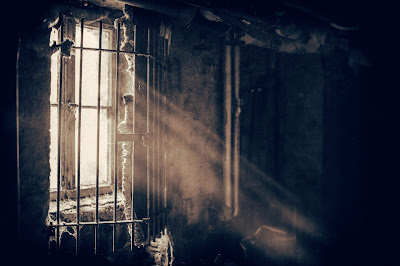
Prison cell window (Credit: Denny Müller/Unsplash)

In the late 18th Century, at the height of the tensions between the young Hassidic movement and its opponents the Misnagdim, the latter did almost everything they could to repress the Hassidim. Some of them even informed on Rebbe Shneur Zalman of Liadi, founder of the Chabad movement, to the Russian authorities. This drastic step was taken according to an official religious dispensation, as part of the excommunication of the Hassidim. 

The informers accused the Rebbe of sending money to his followers in the Land of Israel, thus aiding the Ottoman Empire that then ruled the Holy Land and which was a bitter adversary of Czarist Russia. As a result, the Rebbe was arrested during Sukkot of 1798. Only after many efforts on the part of the Hassidim was he released nearly eight weeks later, on the 19th day of Kislev. This date has since been commemorated in Chabad as the "holiday of redemption."

Thursday, November 11, 2021

Pure Faith, Intellectual Faith

by Rav Mishael Dahan zt"l, yeshiva.co, translated by Hillel Fendel

Stormy waters (Credit:  Tyler Lastovich/Unsplash)

The foundation and ultimate objective of all is the pure faith in He, may His Name be blessed, Who created everything, both hidden and revealed. And as is known, there are two kinds of emuna: emuna that stems from investigation and analysis, and emuna based on that which was handed down through the generations.

Wednesday, November 10, 2021

Thursday, November 4, 2021

Toldot: This Culture Is Not for Us

by Rabbi Netanel Yosifun, yeshiva.co, translated by Hillel Fendel

Great seal of the United States

One of the greatest Talmudic commentators was R. Shmuel Eliezer HaLevi Ideles, known most often as the Maharsha (whose public memorial celebration will be this Wednesday, 5 Kislev). The Maharsha's teachings spread throughout the Diaspora, such that in certain circles the Maharsha's teachings are considered foundational for an understanding of the Gemara, in much that same way that Rashi's teachings are considered foundational explanations.

There is a tradition among Breslav Hasidim to tell stories about the Maharsha as a segula for healing, and even Kabbalists tell the stories that Rabbi Nachman of Breslav would tell about the Maharsha.

As it is known, the Maharsha would waste no time from Torah study every night of the year. He had long hair, and he would tie a rope to the ceiling of the room, so that when he would start to nod off, the rope would pull on his hair and wake him up.

It was said that though the Maharsha studied Torah every single night, there was one night on which he did not – Xmas – on which he would withdraw from his learning and instead deal with his accounting books. One year, the Gentiles informed on the Maharsha saying that he despises X-ians. And the informers brought as proof of their words that every night of the year the Maharsha learns Torah, and only on the night of the birth of their "Messiah" does he withdraw from his studies.

That very year, on Xmas night, the Maharsha was reviewing his expenses as he did every year, when suddenly one of his Torah books fell from the shelf. He picked it up, kissed it, and returned it to its place. A few minutes later, the book fell again – and the Maharsha picked it up, this time placing it more firmly in place. When it then fell a third time, the Maharsha said to himself, "There is a Divine message here." He thereupon opened the holy book and began to search for the message – and precisely at that moment,

Simple, Relaxed Faith – or Stormy, Questioning Faith?

by three rabbis, yeshiva.co, translated by Hillel Fendel

Storm (Credit: Max LaRochelle/Unsplash)

1. Intellect is not Divinity – Rabbi Zalman Gopin, Guiding Rebbe (Mashpia) in Yeshivat Tomchei Tmimim, Kfar Chabad

Emuna [often (mis)translated as "faith"] is something internal and true within one's soul (neshama), and is above the intellect. The answer to the question posed in the headline depends on how that which brings about emuna is understood.